- Home
- News
- Plastic Welding vs Fairing Replacement
PLASTIC WELDING VS REPLACEMENT: WHEN TO REPAIR YOUR FAIRINGS
When a fairing is cracked or broken in a crash, the first question is always the same — repair or replace? The answer has a real impact on cost, turnaround time, and whether your insurance claim runs smoothly.
Not every cracked fairing needs to be replaced. In many cases, professional plastic welding — combined with surface preparation and a proper respray — produces a result that is structurally sound and visually indistinguishable from new. But there are situations where replacement is the only sensible option. Knowing the difference saves time, money, and avoids a poor outcome.
WHAT IS PLASTIC WELDING?
Plastic welding uses heat — typically from a hot-air gun or nitrogen welder — to fuse damaged plastic back together at a molecular level. When done correctly by an experienced technician, the bond is as strong as the original material. At Melbourne Motorcycle Fairings, we use nitrogen plastic welding for critical structural repairs because it produces a cleaner, stronger result than standard hot-air methods.
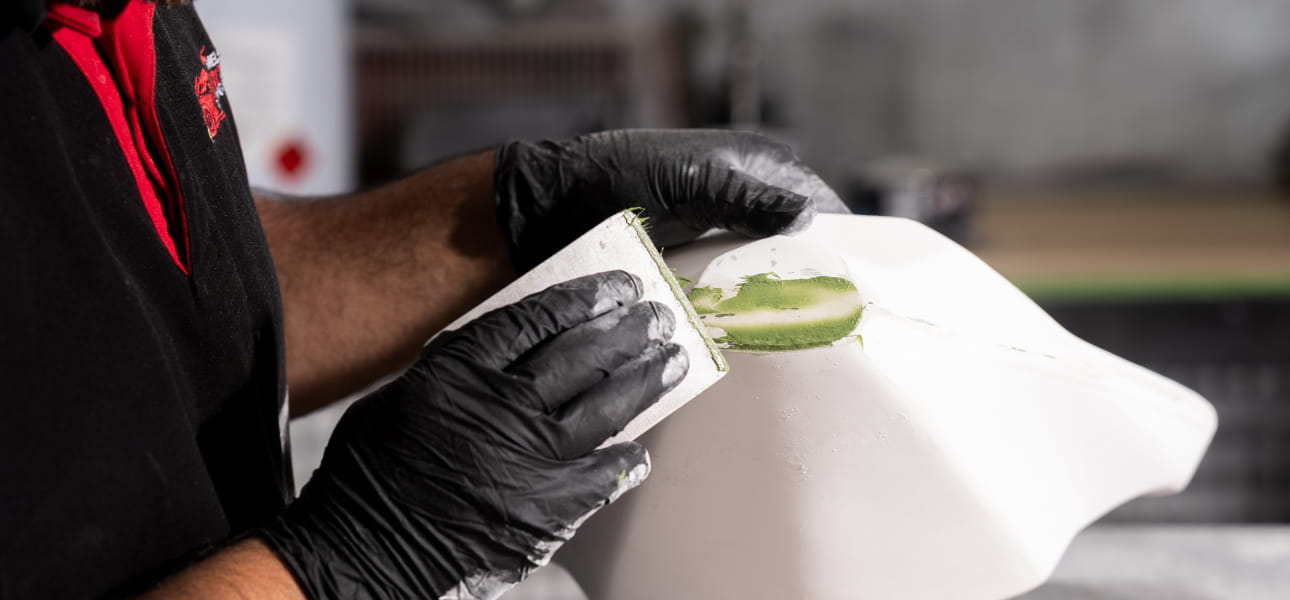
The process involves cleaning the break, v-grouting the crack edge, applying a compatible filler rod, and building the weld from the back face first for maximum structural strength before finishing the front surface. Once the weld is complete, the area is faired smooth, primed, and repainted to match the rest of the bike.
WHEN PLASTIC WELDING IS THE RIGHT CALL
-

Clean breaks and cracks — A single fracture with intact edges welds cleanly and holds well under normal riding conditions
-
Mounting tab repairs — Broken tabs are one of the most common fairing repairs and respond very well to plastic welding with a reinforcement backing plate
-
Discontinued or rare fairings — When replacement panels are no longer available or cost-prohibitive, welding is often the only viable path
-
Insurance cost management — Repairing rather than replacing keeps claim costs down, which can benefit your no-claim bonus over time
"
A well-executed plastic weld on a clean break is invisible once painted. The problem is when repairers try to weld something that should have been replaced — that's when you get a visible repair that flexes and cracks again within a year.
— Rod Seddon, Owner & Director, Melbourne Motorcycle Fairings
WHEN REPLACEMENT IS THE BETTER OPTION
There are cases where the damage is simply too extensive for a weld repair to hold or look right. Attempting to weld severely damaged plastic can result in a repair that looks patchy, flexes unevenly, or fails again under stress. In those cases, replacement is the honest recommendation — and the better long-term outcome for the rider.
- Shattered panels with missing sections or large voids cannot be reliably welded
- Panels with multiple overlapping fractures lose structural integrity that welding cannot restore
- Heat-deformed or warped plastic will not return to original shape through welding alone
- High-flex areas on sportsbikes that experience repeated stress are better replaced than welded
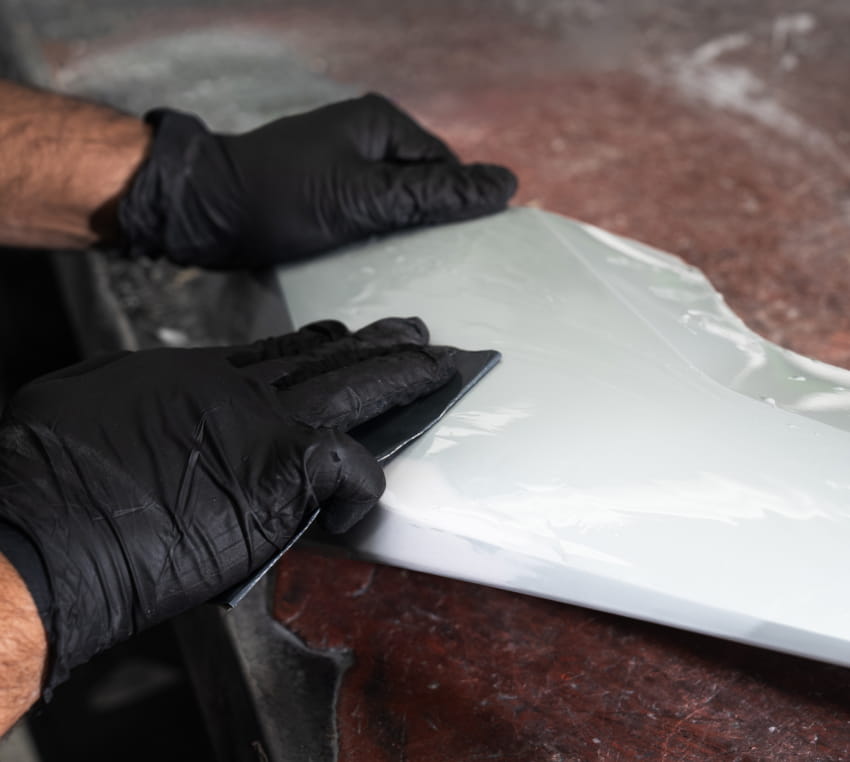
Assessment is the first step — we inspect every panel before recommending repair or replacement
HOW WE ASSESS YOUR FAIRINGS
At Melbourne Motorcycle Fairings, every damaged panel is assessed in person before we make a recommendation. We look at the type of plastic (ABS, polypropylene, fibreglass), the nature and location of the damage, whether mounting points are compromised, and what the final finish requirement is. Only then do we advise repair or replacement — and we explain the reasoning clearly so you can make an informed decision alongside your insurer.
What to Tell Your Insurer
If your insurer's assessor recommends replacement but your repairer believes welding is structurally sound and will produce a quality result, you have the right to request an independent assessment. Always choose a repairer who will provide written documentation of their repair method — this protects you if the repair is ever questioned down the track.
- Ask for a written repair assessment before authorising any work
- Confirm the repair method and materials to be used
- Check whether a warranty is offered on the repair
- Ensure all work is photographically documented before and after
Written by
Rod Seddon
Owner & Director — Melbourne Motorcycle Fairings
Rod has been repairing and repainting motorcycles for over 20 years. As co-owner of Melbourne Motorcycle Fairings, he oversees all repairs personally and has assessed thousands of damaged fairings across every make and model.
 Mon - Fri: 8:00 am - 4:30 pm
 Factory: 14 / 59, Hudsons Road, Spotswood
 info@melbournemotorcyclefairings.com.au